
Purpose
This guide demonstrates how to configure Linux firewall profiles to reject all outgoing network traffic via SureMDM. This restrictive configuration is typically used to lock down compromised devices, prevent unauthorized data exfiltration, or strictly isolate sensitive legacy systems.
Prerequisites
N/A
Steps
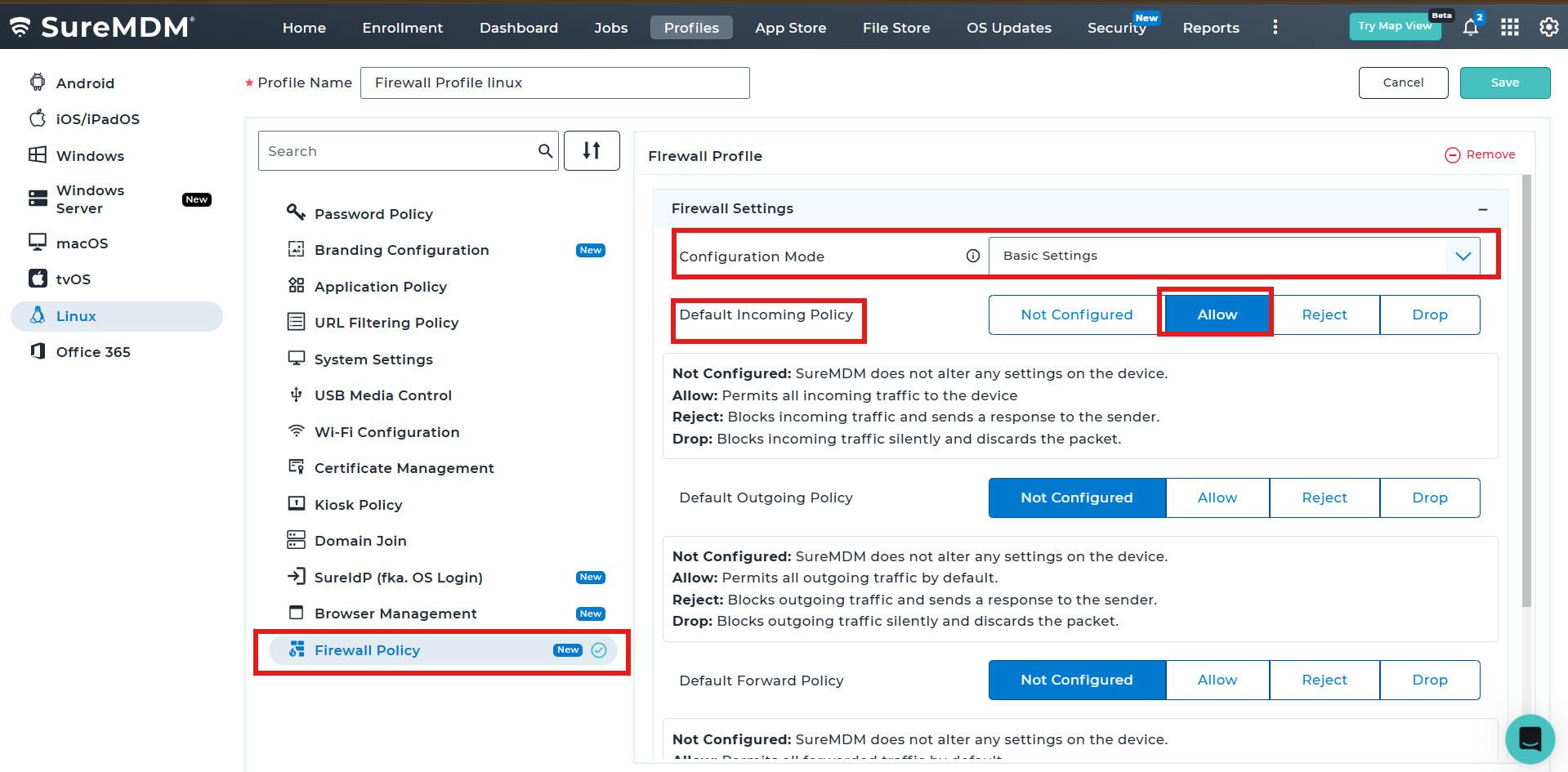
1. Go to the profile section from the top navigation bar.
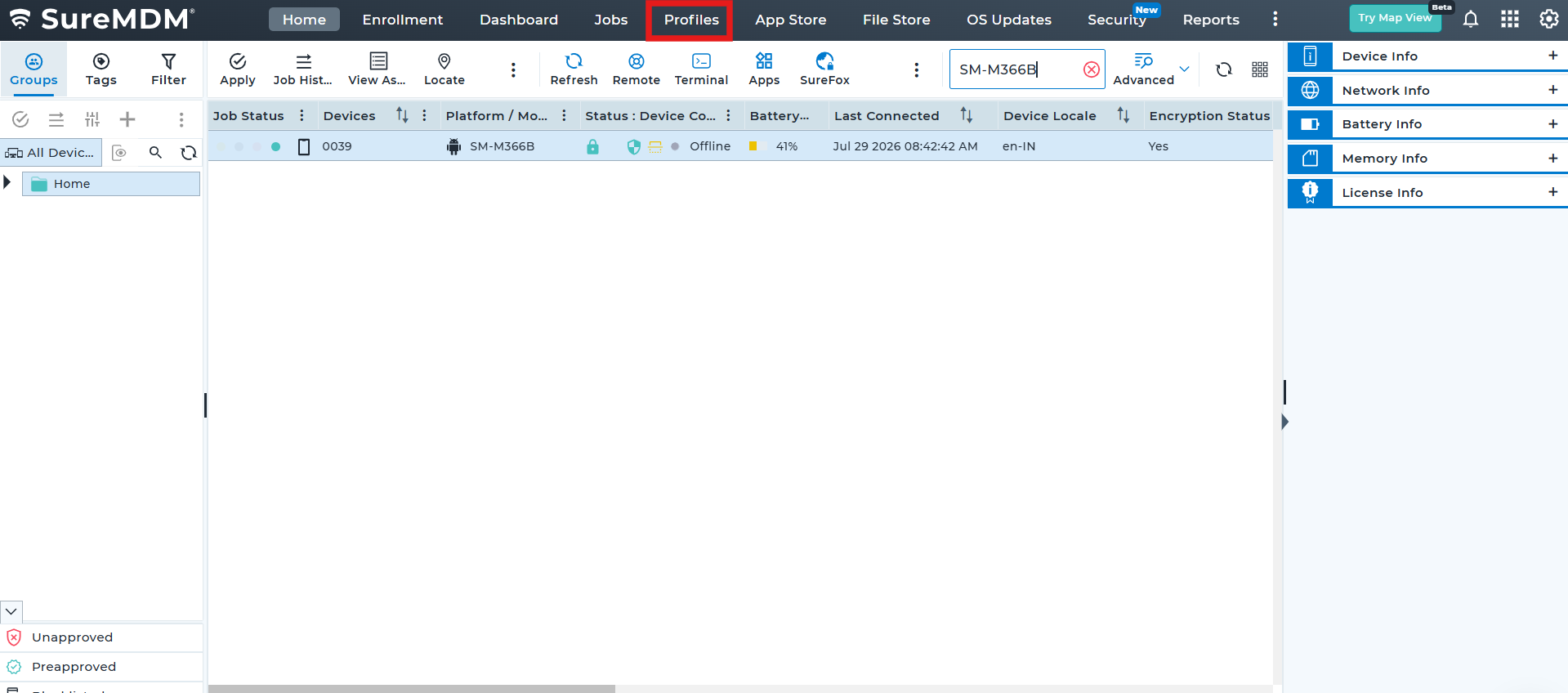
2. Select the LINUX OS option to create a new profile or click on modify to edit the existing profile.
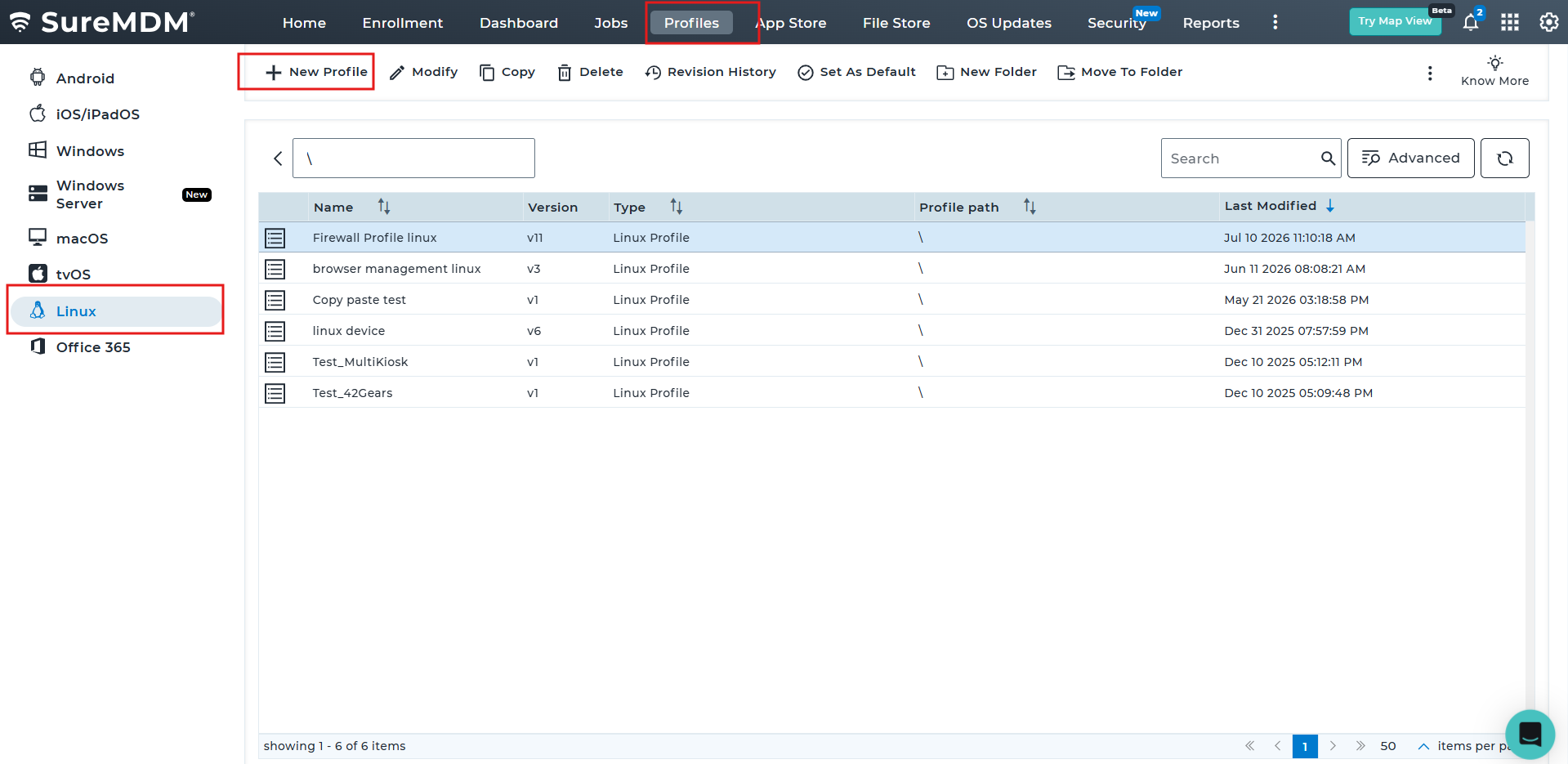
3. Select the Firewall policy in the profile and click on the configure.
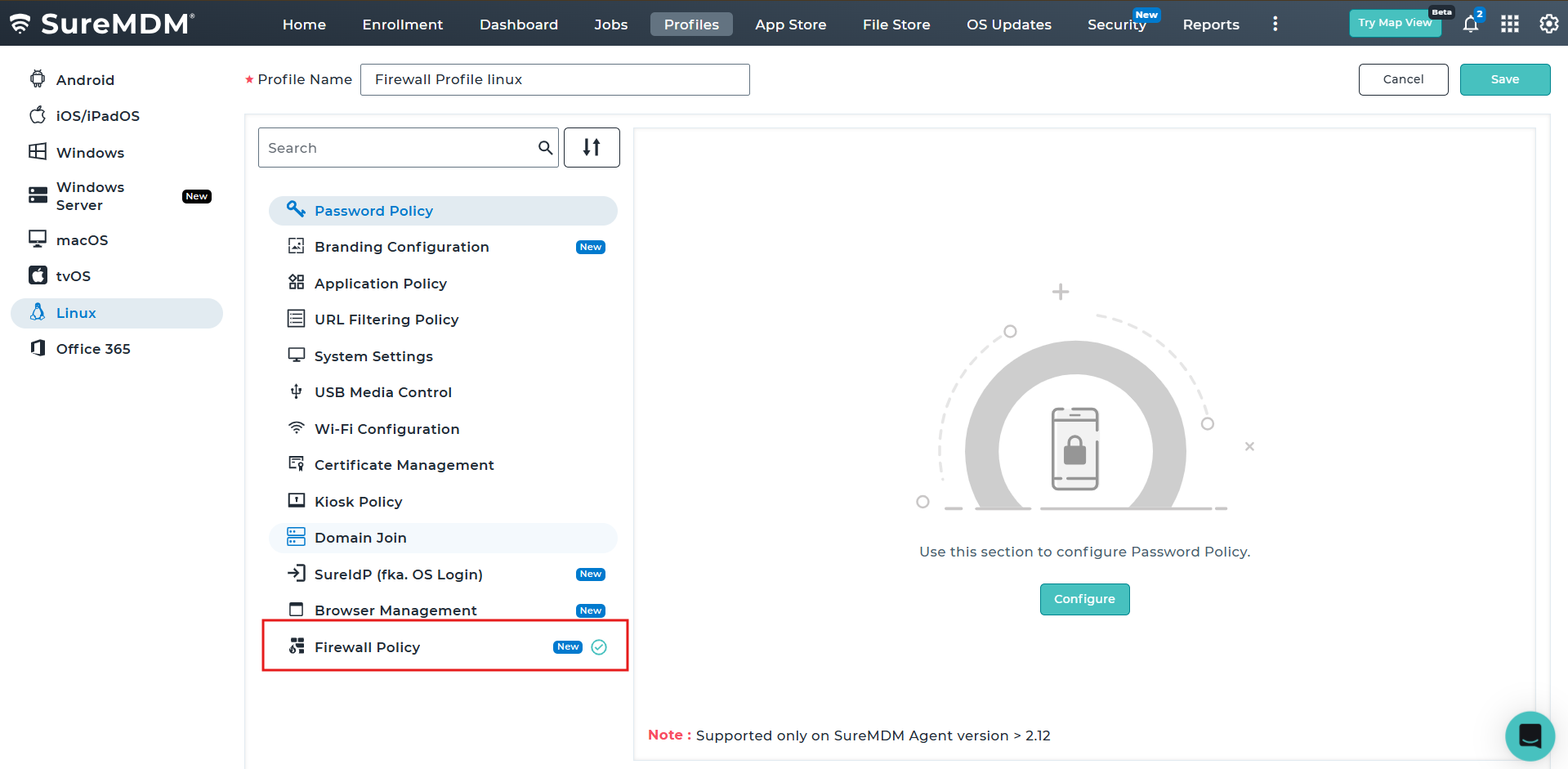
4. Under firewall policy navigate to “Configuration Mode” from the drop down choose the option “Basic settings” and for the tag “Default Outgoing Policy” choose the option as “Reject”.
5.To verify that the firewall policy has been successfully deployed and applied to the device via SureMDM, you can check the active firewall status directly from the Linux terminal or from the SureMDM terminal.
Depending on the firewall manager your profile is using, run the following verification commands:
sudo iptables -L OUTPUT -n -v
After Profile deployment :-

Conclusion
By changing the default outgoing policy to “Reject,” administrators can instantly block all outbound communication from the managed Linux device. Always finalize the deployment by running the recommended terminal commands to confirm the new restrictions are active.
Need more help? Here’s how to get help from our experts.